
Economic Corridor Development in Lao PDR
Development of Economic Corridors in Lao PDR: A Focus on the Greater Mekong Subregion and the China-Laos Economic Corridor
Dr. Phanhpakit Onphanhdala
National University of Laos, Laos
1. Introduction
The Lao People’s Democratic Republic (Lao PDR or Laos) is a small landlocked Southeast Asian nation, with over half of its labor force engaged in the agricultural sector. Yet over the past several decades, economic development has not promoted a significant shifting from agricultural to industrial economies. Instead, a major growth in the energy sector in the late 2000s contributed much to national revenue. Since 2010, Laos sustained an average growth rate of around 7.3%, due to mineral ore exports to China and hydroelectricity exports to Thailand. In 2020, due to the Coronavirus disease 2019 (COVID-19) pandemic and restriction measures, the growth rate was under 2.0% (World Bank, 2024). Recently, the quality of economic recovery and growth was unfavorable due to a sharp depreciation of the local currency and high inflation. In 2023, Lao economic growth is anticipated to be at 4.2% (LSB, 2024).
A major economic reform in 1986 in trade and investment encouraged the government to be more outward looking. In 1994, the First Thai–Lao Friendship Bridge opened to the public. Built over the Mekong River, it was the first substantial land link between the two nations. Since then, formal cross-border trade has been conducted. The Second, Third, and Fourth Friendship Bridges between the two nations followed, opening in 2006, 2011, and 2013, respectively. In 2015, the first Lao-Myanmar Friendship Bridge officially opened as a flagship land link between the countries . Banomyong (2008) evaluates this economic corridor development level as the beginning of the first stage by physically linking an area or region.
The Greater Mekong Subregion (GMS) economic corridor brings trade and investment benefits to its member nations, including rising incomes, changing economic, social and demographic structures, and institutional change (Hill & Menon, 2020).
As a member state, the Lao government works to improve development fundamentals by participating in GMS economic corridors (NSEC, EWEC, and SEC). GMS economic corridors advance regional economic development, and the Lao-China Economic Corridor (LCEC) also plays a major role in the Lao economy. Over the past two decades, China has been among the three leading trade partners of Laos, after Thailand and Viet Nam. The proportion of accumulated trade values between Laos and China was only 11% and 10% from 2003 to 2007 and 2008 to 2012, respectively (ASEAN Stats, 2024). These figures rapidly increased after the BRI to around 31% and 48% from 2013 to 2017 and 2018 to 2022, respectively (MOIC E-Stats, 2024). The accumulated international bilateral trade value from 2013 to 2024 was about US$31 billion, making China a major trade partner of Laos. This shows a significant shift in Lao international trade (Onphanhdala, 2022; Onphanhdala, 2023). Therefore, this chapter will address GMS economic corridors as well as the LCEC as potential case studies for economic development in Laos.
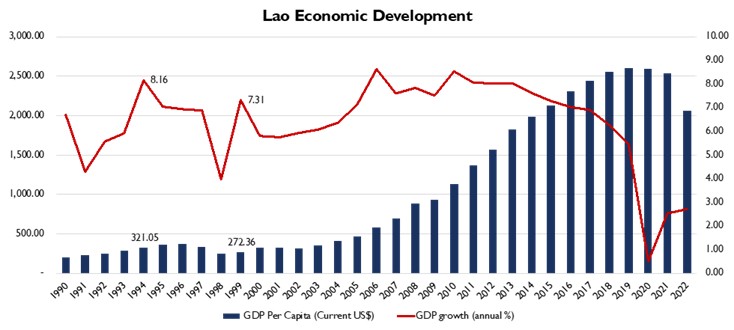
Figure 1 Per Capita GDP and GDP Growth of Lao PDR, 1990-2022
2. Economic Corridor Development in Lao PDR
2.1. National Economic Corridor Development
As stated in the Ninth National Socioeconomic Development Plan (NSEDP) 2021-2025, the government aims to “[i]mprove the quality and sustainability of the economic structure according to the sectors, economic actors (state, collective enterprises, [micro, small, and medium enterprises] MSMEs), and regions (focusing on development along the Laos-China economic corridor, East-West corridor), including Special Economic Zones, industrial estates, smart cities, dry ports, and others. Continue to deepen regional development (northern, central and southern regions) according to the comparative advantage of each region to create harmonious inter-linkages, promote mutual support and to create quality and more balanced economic relationships; and focus on the development of the Laos-China economic corridor, North-South corridor, East-West corridor, Special Economic Zones, smart cities, dry ports and logistics services, industrial estates, tourism industry (nature, history, culture and agricultural production).” It also plans to“[i]ncrease investment attraction in the new areas along the Laos-China railway and other economic corridors, including carrying out a feasibility study on building smart cities in Natoei area, Lung Namtha Province, Namor area, Oudomxay Province, and Nongpan village, Hadsaifong District in Vientiane Capital.” […]. The Ninth NSEDP likewise emphasizes a plan to build, upgrade, rehabilitate, and maintain 2,800 kilometers (km) of land transport infrastructure, including roads, bridges, and expressways as part of the network along the economic corridors.
2.2. Special Economic Zone Development
Recently, Laos has lacked a specific economic corridor development policy. Development plans are articulated in general contexts in the aforementioned NSEDP which aligns with sector development plans on transportation, logistics, trade facilitation, and investment promotion. A shift toward enhanced liberalization is seen in integrated investment formalities appealing for national treatment of foreign investors, especially in SEZs (Suruga et al., 2023).
In the early 2000s, when SEZs were beginning to be established, the SEZ authority was supervised by the prime minister in the National Committee for Special and Specific Economic Zone Secretariat Office (S-NCSEZ). SEZs were defined as ‘zones that have their specific administrative mechanism to create favorable conditions to attract investment which uses high, innovation for production of agricultural products, clean production using fewer natural resources and energy for sustainable and environmental-friendly development.’ SEZs have long been promoted, although only recently has some manufacturing begun. In 2018, they were assigned to the Ministry of Planning and Investment, which appointed a Special Economic Zone Authority (SEZA).
Currently, there are 1,430 registered business units at varied stages of development across 17 national SEZs , a 615% increase from 2018. Most (80%) businesses are foreign-owned, having relocated to Laos from neighbouring countries. In terms of total investment value, in 2023, the Golden Triangle is the largest SEZ in Laos, followed by Boten Beautiful Land, Saysettha Development Zone, Thatluang Lake, Savan-Seno (Site C), and VITA Park, in diminishing order of significance. The most demonstrably active SEZs are the Golden Triangle and Boten Beautiful Land in the north aligning with the NSEC and LCEC. In 2023, about 180 companies infuse SEZs with over US$520 million of investment value and US$190 million of registered capital. 70% of investment went to the services sector, followed by commerce (17%), industry (10%), and agriculture (2%). A proportion of taxation derives from value-added tax (VAT) (27%), business turnover tax (18%), salary tax (17%), fees (13%), and profit tax (11%). The largest contributor is Golden Triangle (54%), followed by Savan Seno SEZ (12%), and Saysettha Development Zone (9%). SEZs employ over 60,000 workers, only 30% of whom are hired locally. By contrast, there is no new registered business unit in southern SEZs.
Table 1 SEZ Establishment in Laos
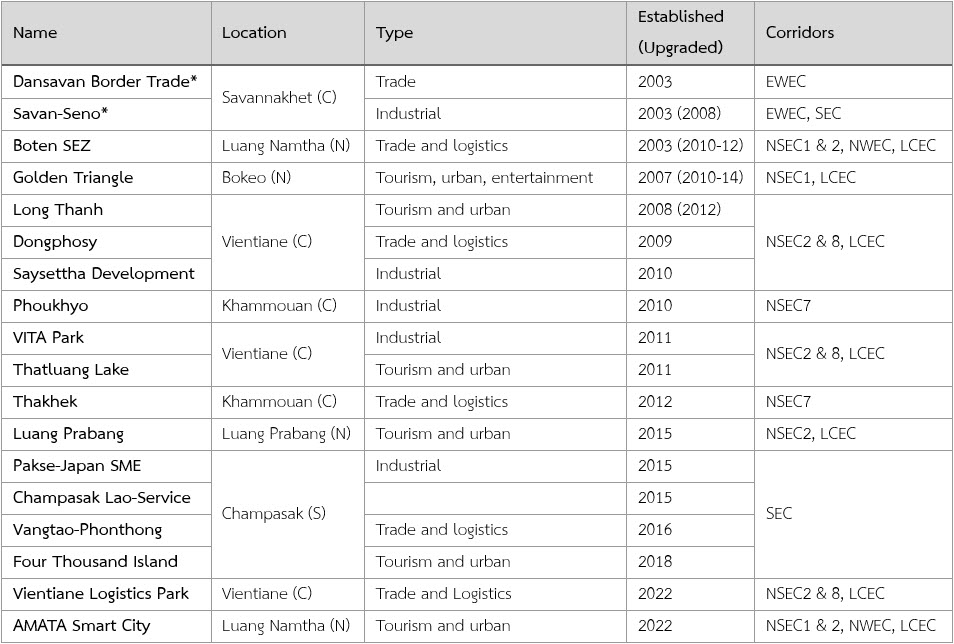
Source: Author’s compilation from SEZA (2024), http://www.laosez.gov.la
Note: * They were merged into Savannakhet SEZ on 26 February 2020.
SEZs have good potential as growth nodes and incubators of good practice (Frielink & Bando, 2018). They may contribute to added value and boost integration along regional and international supply chains. Currently, SEZs are improving their infrastructure for capacity extension. At the Golden Triangle, the Bokeo International Airport opened in February 2024. The third largest airport in Laos, it will be open for domestic flights only at the first stage of pilot operation (KPL, 2024). In Vientiane, developments include beltway construction along the Saysettha Development, a new connecting road in the Thatluang Lake, a container yard extension and bridge over a railway in the Vientiane Logistics Park. Due to contract issues, there are no new infrastructure improvements in Dongphosy.
2.3. Economic Corridors Development
2.3.1. GMS Economic Corridors – EWEC and NSEC
The EWEC is about 1,481 km long, ranging from Myawaddy-Mukdahan-Savannakhet-Dansavanh-Danang. Only 14% of its length is in Laos. It connects Laos to Viet Nam and Thailand by the National Road No. 9 from east to west, aligning with the Second Lao-Thai Friendship Bridge, Dansavan Border Trade Zone between Laos and Viet Nam, and the Savan-Seno SEZ. Since 2003, when the Savan-Seno SEZ was founded, it has attracted 174 business units. 34% and 23% of these are local businesses and joint-venture companies, respectively. They have invested in industry, services, logistics, and trade. The SEZ employs over 4,000 workers, 90% of whom are local employees. The most recent development since its establishment is Savan Logistics, recognized as the first inland container depot in Savannakhet province. In 2020, when the Savan-Seno SEZ and Dansavan Border Trade Zone merged into the Savannakhet SEZ, it adopted a CBTA allowing cross border transport along the EWEC.
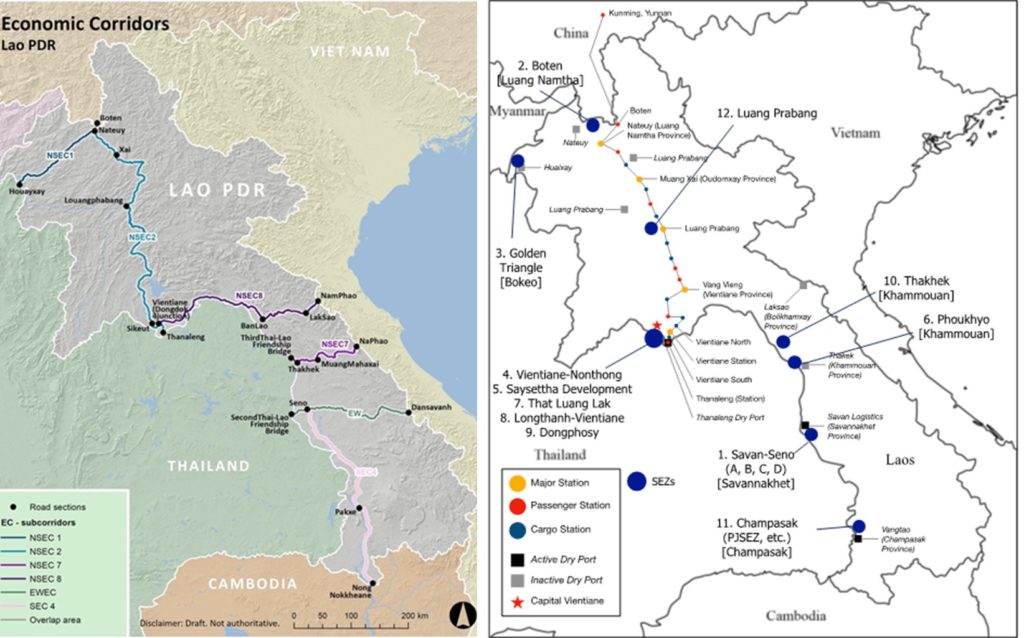
Figure 2 Economic Corridors and Special Economic Zones in Lao PDR
Source: Author’s compilation from GMS (2021)
The NSEC branch running through Laos is 1,434 km or around 12% of the total length. ADB (2018) reports new branches of the NSEC:
- NSEC2, from north to south along the National Road No. 13 and the LCR, goes from Boten, Luang Prabang, and Vientiane down to Udon Thani and Bangkok (Thailand).
- NSEC8 from east to west, connecting Vientiane, Pakxan, Vinh (Viet Nam). This corridor follows National Route No. 8 and aligns with SEZs and a dry port in Vientiane and an incoming dry port in Laksao.
- NSEC7 from east to west, connecting Udon Thani (Thailand), Thakhek (Laos), Vung Anh (Viet Nam). It includes Thakhek and Phoukhyo SEZs, and a planned dry port in Thakhek.
Vientiane is a node connecting with the NSEC. Vientiane Logistics Park has attracted 13 business units investing in logistics services and trade, of which three are local businesses. The SEZ employs around 500 workers, of which 98% are local employees. The major dry port is Thanaleng Dry Port, facilitating freight transport from east to west, and north to south. The Boten, Huayxay (Bokeo province) also adopted the CBTA for transport facilitation with China and Myanmar. In addition to the National Road No. 13, the railway also plays a vital role in NSEC development in Laos.
The SEC branch runs from Kaysone Phomvihan (as a node connecting with the Savannakhet EWEC) through Pakse down to Strung Treng in Cambodia (the remainder of the SEC is mostly in Cambodia). This corridor includes SEZs in Savannakhet and Champasak, and Vangtao Dry Port. There are four SEZs in Champasak province. Since their establishment, the SEZs have attracted over 50 business units, mostly foreign-owned (44%) and local (27%), which invest in small and medium manufacturing (Pakse-Japan SME), logistics (Vangtao-Phonthong), and tourism-urbanism (Four Thousand Island).
2.3.2. Lao-China Economic Corridor along LCR
In the Lao context, the LCEC fundamentally forms economic links along the Laos-China railway, connectively transforming Laos from a landlocked to a land-linked country. The framework comprises one belt, three cores and three zones along the Laos-China Railway. The one belt refers to the Laos-China railway economic belt; while the three cores are a trio of major node cities (Mohan-Boten Cross-border Economic Zone, Luang Prabang, and Vientian). The two zones are the LCEC in Yunnan province, trade logistics and tourism zone in the north, and the industrial zone in central Laos (Leebouapao, 2019; Outhavong, 2021).
Along the LCEC in Laos is the Boten Beautiful Land SEZ, with 321 business unit investors, mainly in services and logistics trade, of which 311 are foreign owned. Near the Boten SEZ, a dry port in Nateuy district is planned for future logistics hubs. In addition, the Golden Triangle SEZ along the NSEC1 has business units mostly (76%) investing in the services sector, followed by trade (21%) and agriculture (3%). The planned dry port in Houayxay district should make Laos more attractive as a logistics hub, due to its strategic location. The major advantage of LCEC is its development along the LCR. It can transport to and from Yunnan, Guangxi, Chongqing, Shanghai, Beijing, and Qingdao, under the RCEP agreement. In addition, the CBTA was adopted for road transport between Boten (Laos) and Kunming (China).
Banomyong (2008) distinguishes four stages of corridor development: transport, multimodal, logistics, and economic corridors. For Laos, national Roads No.13, 9, 12, and 8 are categorized as in the first stage of corridor development, physically linking an area or region. The LCR operation of December 2021 shows significant corridor development in Laos. Although Laos has a rail system, it does not yet systematically connect with other transport modes, especially air freight. For the third stage of corridor development, the LCR, friendship bridges, dry ports and SEZs are fundamental for logistics to harmonize the corridor institutional framework, facilitating efficient movement and storage of freight, people, and related data, in addition to physically linking an area or region.
2.4. Trade and Investment along Economic Corridors
2.4.1. Trade and Investment through GMS – EWEC and NSEC
Along the EWEC, total border trade value between Laos and Thailand increased constantly from 2017 to 2022, except in 2019 and 2020 due to the COVID-19 pandemic (Table 2). Savannakhet is a significant border checkpoint, accelerating international trade along the EWEC. Border trade between Savannakhet and Mukdahan produced the second largest value after Vientiane – Nongkhai (33.1%), which accounted for around 21.5% of total border trade between the nations in 2022. Major exports included electronic application parts, telecommunication apparatuses, and agricultural products. Those products are mostly manufactured in the Savannakhet SEZ, which has had a trade surplus since 2019. Its trade value accounts for around 12.2% of total trade value between Laos and Thailand, while most of Lao exports to Thailand consisted of electricity (Savan Park, 2023). This suggests the importance of Savannakhet SEZ in economic corridor development in Laos.
Table 2 Border Trade Value Between Laos and Thailand by Checkpoints
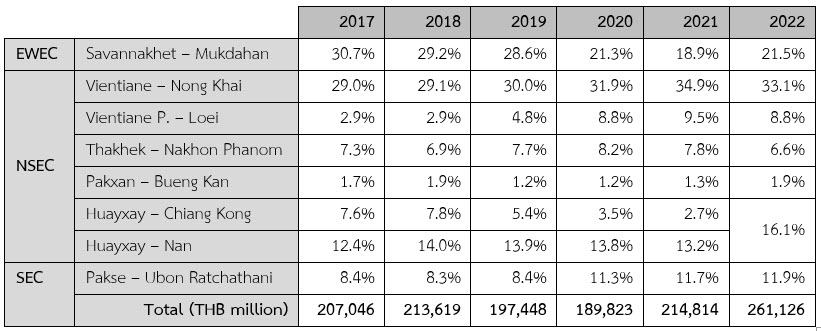
Source: Author’s Compilation from Various Department of Foreign Trade of Thailand; Royal Thai Embassy Vientiane.2023
Note: Vientiane refers to Vientiane Capital, Vientiane P. refers to Vientiane Province
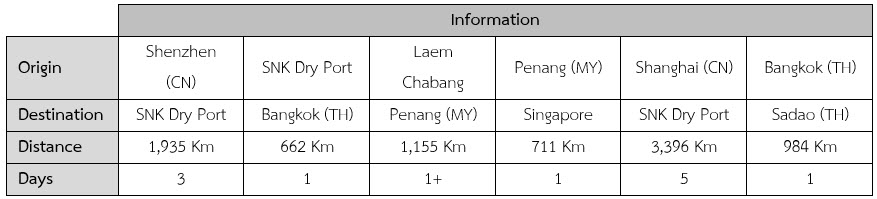
Table 3 Distance to and from Savannakhet Dry Port
Source: Savan Park (2023)
Note: SNK Dry Port refers to Savannaket Dry Port. For more information, please see Annex 4
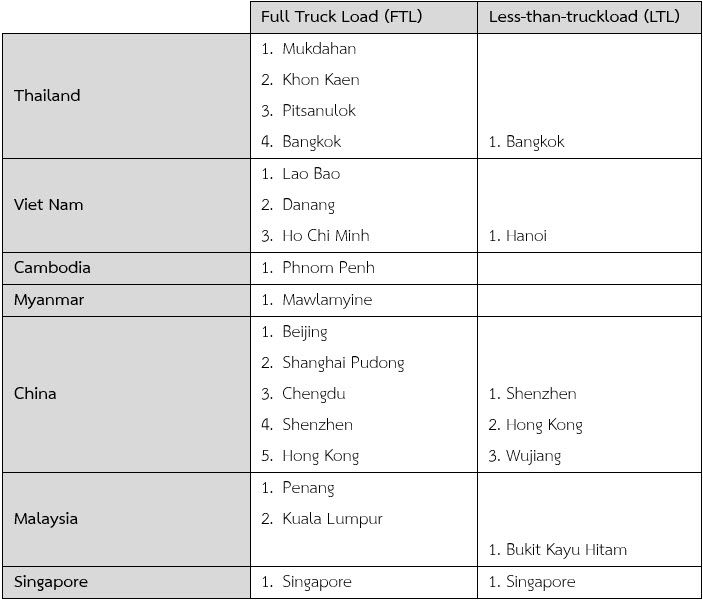
The Savannakhet Dry Port is the first inland container depot in Laos, established in 2016. It is located in the Savannakhet SEZ along the EWEC and the R9. The dry port provides both full truck load (FTL) and less-than-truckload (LTL) for freight transport . In addition, its warehousing, freight forwarding, and customs clearance services could help decrease time spent for relevant procedures. For example, it takes only one day for truck transport from the dry port to Bangkok, Thailand (Table 3). In 2022, this dry port was promoted by the government to an international integrated intermodal transport and logistics system under the UNESCAP Intergovernmental Agreement on Dry Ports. It also provides container train freight by the Laos-China Railway, which facilitates cross border multimodal transport between road and railway freight. As a result, freight transport may be transported from Shenzhen to Savannakhet Dry Port in three days (Table 3). One of the most prominent such ports along the EWEC, the Savannakhet Dry Port’s routes include Singapore, Malaysia, Thailand, Hong Kong, Viet Nam, and China. Its in-transit freight value increased from around US$4.4 billion in 2019 to US$6.9 billion in 2020 and US$9.5 billion in 2021 (Savan Park, 2023; Royal Thai Consulate-General Savannakhet, 2023). From January 2022 to August 2023, its in-transit freight value increased to US$10.5 billion. For these reasons, the dry port shows significant potential in regional economic corridor development.
Table 4 Savannakhet Dry Port FTL and LTL Routes
2.4.2. Trade and Investment through LCR – LCEC
As the LCEC parallels the NSEC extending from the north to Vientiane, the greatest advantage of LCEC is its development along the LCR . Rail transportation could shorten travel time between Vientiane and Kunming City from three days to ten hours and lessen logistics costs by around 40-50% or US$30 per ton, as per the World Bank (2020). For domestic transport, the railway could shorten travel time between Vientiane and Boten (414 km) from over 20 hours to less than 5 hours, decreasing costs by approximately 20-40%. In 2023, LCR EXIM users increased by over 470% compared to the previous year, according to the October 2023 LCR report. In the first quarter of 2024, freight volume was approximately 1.38 million tons, an increase of around 33.6% from the same time during the previous year. As of 13 April 2024, the accumulated freight volume was around 8 million tons of over 3,000 product types, involving over 12 countries by using Vientiane-Kunming as interconnecting stations. Currently, 2013-2024 trade value between Laos and China accounted for 25% of total Lao trade, with China as the second largest trade partner of Laos after Thailand (47%) and followed by Viet Nam (12%) (MOIC E-Stats, 2024). The LCR and Lao logistics company also cooperate on one day parcel express for domestic transport in February 2024 (Table 6). The LRC could offer opportunities to more partners and freight destinations as it becomes more secure and with timely arrivals. For example, currently, rail freight transport covers Laos, Thailand, Viet Nam, Myanmar, and 12 other countries, using Vientiane and Kunming as interconnecting stations. In April 2024, the first thrice weekly timetable freight train from Zhengzhou to Vientiane has also been officially launched.
Table 5 A Laos-China Railway Development Timeline
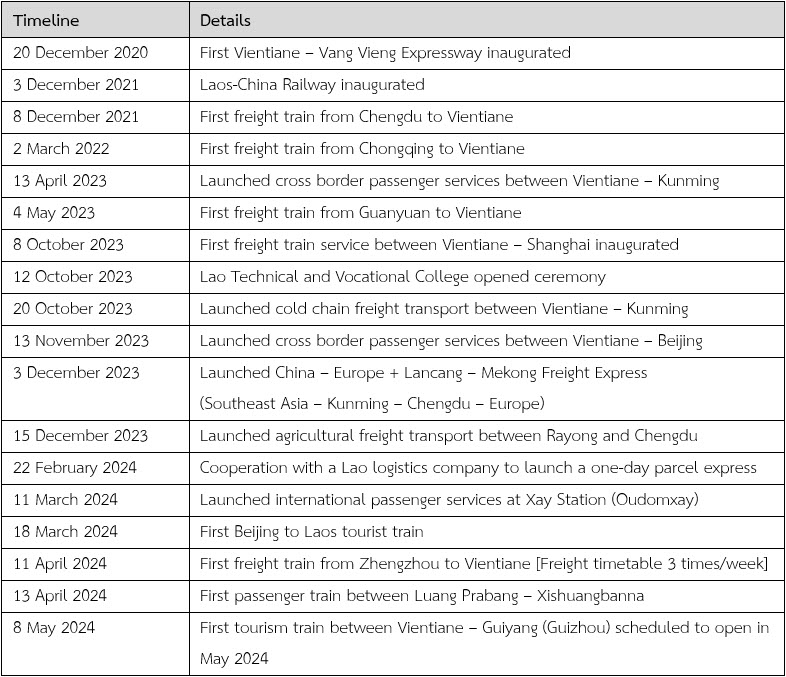
Source: Author’s compilation from diverse sources including LCR (2024)
Table 6 Freight and Passenger Transport by LCR
Note:
*Including passengers and freight in Kunming
**Fertilizers, cassava, millet, iron ores, barite for exports. Electronic devices, solar electric applicants, and cold-chain products for import.
*** Export to China around 6.3 million tons, import from China around 1.65 million tons.
****Freight covers Laos, Thailand, Viet Nam, Myanmar, and 12 other countries, using Vientiane and Kunming as interconnecting stations.
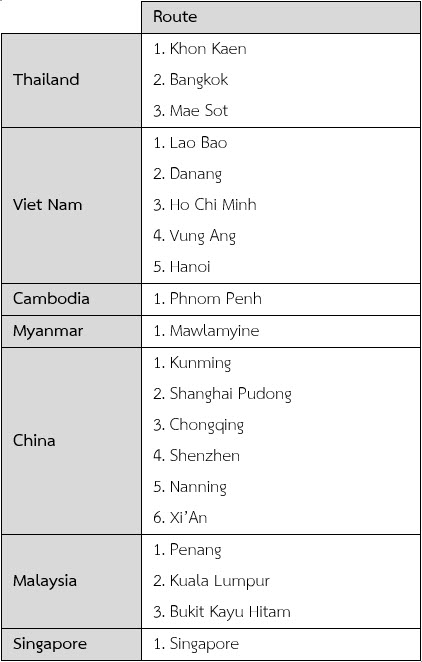
With nine potential dry ports, efforts to improve logistics facilities and consolidate with rail connectivity could optimize transport costs and competition in the freight forward industry. For example, Thanaleng Dry Port (TDP) in Vientiane Logistics Park (VLP) , anticipating eliminating 50% of logistics costs. TDP is an international cargo terminal, serving as a multimodal transport, parcel sorting center, and international cross-border logistics hub. Since opening for service in 2021, the dry port has handled over 50,000 containers. The monthly rate rose to over 7,000 during the first half of 2023 for containers destined to Thailand, Viet Nam, Cambodia, Myanmar, Malaysia, Singapore, China, and Russia (KPL, 2023).
Table 7 Thanaleng Dry Port Routes
Source: Thanaleng Dry Port (2024)
3. Challenges to Economic Corridor Development in Lao PDR
3.1. Infrastructure Challenges
3.1.1. Transport
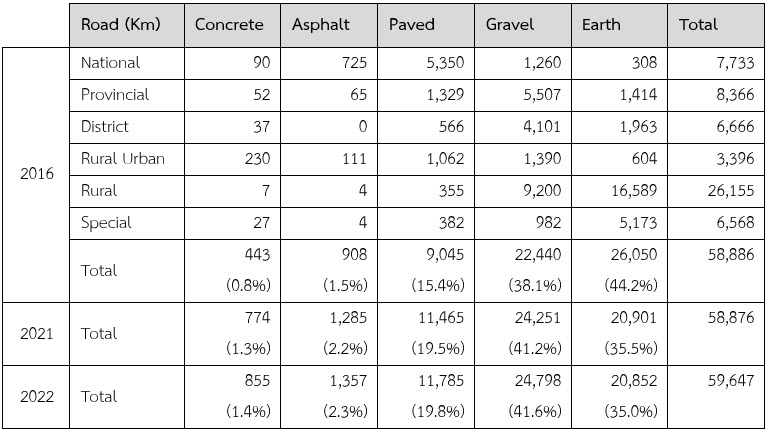
Road transport is the most frequently used freight transport mode in Laos, accounting for around 96.3% of total freight transport (LSB, 2023). The current road network in Laos is estimated at around 59,647 km, only 23.5% of which is paved (tarred and concrete) (Table 8). More than half of roads are classified as in poor condition, an infrastructure challenge to Lao economic corridor development. Onphanhdala et al., (2017), Onphanhdala & Philavong (2018) and the author have observed that bad road conditions increase business cost and duration for freight transport. In the rainy season, it is difficult to transport goods, including cold-chain freight forwarding, particularly in the northern part of Laos. Despite a new highway from Vientiane to Vang Vieng (Vientiane province), national roads to other provinces are narrow and in poor condition, particularly the route between the border and cities. Poor road conditions are caused by overburdened trucks carrying minerals and woods, in addition to weak enforcement of relevant laws and regulations. Such vehicles consume more fuel as well as time, leading to overtime payments for drivers and high transport costs.
Table 8 Transport Connectivity in Laos
Source: LSB (2023), PWT (2017), UNECAP (2022)
The LCR is expected to improve the efficiency of the Lao transport network and reduce transport costs by 30%. Freight transport by rail has been increasing since it opened in 2021. However, rail transport network coverage is limited to the northern part of the country, so freight service users transport freight by truck to provinces lacking railway networks. Onphanhdala (2023) confirmed that rail freight services users consider using alternative freight forwarders, particularly trucking for domestic transport for two reasons: limited rail network coverage and high cost for rail services compared with other transport due to charges, procedures, documentation, and operation timetables. For international transport, services users tend to choose maritime transport as possessing a small differential compared with rail transport. Rail freight services users find it difficult to reserve limited containers, some of which are antiquated. With a single rail and electricity power system, it is a challenge to connect with the current regional double rail system.
3.1.2. Other Facilities
In terms of cross border transport management, the CBTM system was recognized as a method for managing cargo, container, and transport vehicles through inland, water, rail, and air international checkpoints.
Its purpose is to facilitate and accelerate interstate and transit freight transport through a web-based application (app). However, it is not yet fully employed for implementation at every checkpoint. Logistics infrastructures do not align with certain multi-mode transports. For instance, trucking containers do not fit rail dimensions. With respect to transport mineral ores, it is necessary to unload ores at a dry port before reloading them into rail containers. Additional measurement and approval procedures are more time-consuming and costly, requiring added approvals. A dry port function should facilitate logistics businesses and reduce transport time, but this one lacks sufficient comprehensive logistics system management and warehouse management to support a full logistics system. Therefore, the freight transport system is inefficient, especially with large cargo volumes (Onphanhdala, 2017: Onphanhdala & Philavong, 2018; Onphanhdala, 2019). Expensive dry port service charges and fees are major challenges to economic corridor development. The most routinely expensive is the Vangtao, followed by Vientiane Logistics Park (TDP), and SNK Dry Port. Each dry port has individual regulations and defects in terms of staff, coordination, and governance. However, the amended dry port decree that is anticipated for promulgation in 2024 should lead to improvements.
3.2. Institutional Challenges
3.2.1. Domestic Rules and Regulations
Laws, regulations, and customs formalities related to interstate and transit transport have been classified by authority level, such as law, decree, decision, instruction, notification, and official letter. Sometimes, an instruction and notification may be promulgated at a ministerial or provincial level based on the current context.
In the 2020s, customs formalities were improved in accordance with strategies of land-link transformation, modernization, and economic corridor integration. The amended version of the customs law determines enforcement area (cross-border customs checkpoint, including country territory), arrival and departure conditions of goods, duty free areas, and facilitation principles for transit goods, temporary importation, and import for re-exported vehicles and fuel. Customs formalities also include the decree on duty free zones at 10 international border checkpoints , aiming for economic corridor development and transit facilitation. In terms of soft infrastructure, although the Lao National Single Window (LNSW) was recognized since 2015, it was only applied at international border checkpoints about five to seven years later. Only major checkpoints employ the LNSW to manage all types of import-export items, such as the Friendship Bridges I, II, and III as well as the Naphao, Dansavan, and Vangtao checkpoints. But actual implementation remains a matter of concern.
The electronic customs clearance systems (ASYCUDA), AHTN and HS were updated. However, ASYCUDA does not match with the regional system, causing burdens on interstate trade and transport, especially for Laos to integrate regional economic corridors (Onphanhdala, 2019; Shrestha & Kyophilavong, 2021). As mentioned, international transit fees by railway are among the challenges of competitive logistics. The temporary decision No. 6003/MOF, issued on 1 December 2021 specified collecting 2 million, 2.5 million, and 3 million kip per 20-, 40-, and 45-foot cargo container, respectively.
Onphanhdala & Philavong (2018) and Onphanhdala (2019) explain that land transport and land traffic legislations provide general statements on truck limitations, but lack regulations related to truck bans and unqualified technical trucks. Measures against violators only refer to fee and fine charges, with no strong statements about enforcement. However, special goods transport regulations are limited. Few types of goods are deemed dangerous: cooking gas, fuel, ozone depleting substances (ODS), and explosive materials. To prohibit goods relevant to national security, regulations are authorized by the Ministries of National Defense and Public Security. For rail transport, the law was issued in December 2018, but still restricts fuel and petroleum transport.
3.2.2. Bilateral/Regional/Multilateral Rules and Regulations
Laos has bilateral transport agreements with Thailand, Cambodia, Viet Nam, and China, but not with Myanmar (Table 5). This means that Lao trucks can travel to these countries based on bilateral agreements (Yoshida, 2016). There is no vehicle quota under the bilateral agreement with Thailand, Viet Nam, and China, except with Cambodia. The competent authorities of both countries annually permit a quota of only 40 commercial vehicle quotas. Laos appears to exploit the CBTA, but Lao trucks are not allowed to enter the Laem Chabang Port. This is a challenge for Lao economic corridor development. Under the ASEAN framework agreement on transit goods as well as multimodal, interstate, and cross border passenger transport, none is fully implemented. Each framework is only at the planning, discussion, or pilot stage (DPC, 2019). This is probably due to protocol ratification and readiness in each nation.
In 2003, the GMS Cross-Border Trade Agreement entered into force among GMS countries. In April 2024, CLTV countries strengthened cooperation in trade, investment, and tourism to enhance the EWEC and the CLV Development Triangle. Simultaneously, a joint meeting among LTV countries supported regional economic integration, especially the EWEC. Laos and Viet Nam have also signed a new trade agreement to boost trade promotion activities and border trade infrastructure.
In terms of LCEC, the Lao government has attempted to enhance its cooperation with regional integration, including China, in the ASEAN-China Free Trade Area (ACFTA; 2002) and the Agreement on Trade in Goods of the Framework Agreement on Comprehensive Economic Co-operation between the ASEAN and China (2004). The latter was signed during the ASEAN – China Summit meeting in Vientiane, with other agricultural products preferences for Laos for exports to China.
3.3. Logistics Service Providers Challenges
Three major challenges of Lao logistics service providers:
- Laos acts as transshipment point for cargo between Thailand and Viet Nam, during which only Thai or Vietnamese trucks are used for cross-border freight transportation instead of Lao trucks. This is a result of production network activities between Thailand and Viet Nam and lower logistics costs among both countries that makes it difficult for Lao freight firms to increase their national market share. Freight firms often find it more profitable to focus solely on transit custom clearance and the reloading service instead of investing in trucks and dealing with complex logistics management. For these reasons, freight-forwarding firms in Lao PDR serve mainly as local subcontractors and do not participate in cross border freight transportation business (Onphanhdala et al., 2017; Onphanhdala & Philavong, 2018).
- Operationally, the LCR will transform the logistics business with a railway connecting Thailand, Laos, China, Russia, and Europe by different transport modes as part of the BRI. Normally, business rivals battle over the same field. Land freight transport businesses compete with one another rather than with different transport modes. Lao logistics service providers compete not only with foreign inland freight service providers, but also freight transport by rail, air, and sea.
- High logistics costs challenge logistics service providers. Fuel price increases due to supply shortages, production cuts, and geopolitical conflicts, also directly affect transportation costs. The situation is more pronounced with regard to local currency depreciation, because Lao fuel consumption relies solely on imports. Vehicle repairs due to poor truck quality and challenging route conditions is another road transport challenge, raising costs. Despite these issues, technology transformation from fuel-consuming to electric vehicles is limited. Change cannot suddenly occur because of increased expenditure for buying new vehicles, more waste from replaceable trucks, and poor road conditions. Yet in the short term, hybrid technology could be a potential solution.
3.4. Manufacturing, Trading, and Investing Challenges
Lao entrepreneurs could seize an opportunity from the LCEC, particularly agricultural product exports. The value of agricultural products exported to China increased from US$120 million in 2015 to US$374 million in 2022, accounting for around 15.3% of total exports to China (MOIC E-Stats, 2024). Agricultural sector development also significantly participates in economic transformation, especially in northern Lao provinces. It reduces poverty reduction and boosts income equality among Lao smallholding farmers, particularly agricultural entrepreneurs (Onphanhdala & Philavong, 2021; Onphanhdala, 2023). More income from selling agricultural products may improve local livelihoods in rural areas where poverty is a major constraint.
Logistics services providers could also find an opportunity in interstate and transit goods, particularly through the LCEC. Trade volume between Laos and China has increased sevenfold in recent years, suggesting a considerable volume of merchandised trade flow movement. Lately, the demand for Thai fruits and vegetables in China is increasing, especially in eastern and southern China. There are two common ways for Thailand to export fruits, vegetables, and related food products to China. First, by shipment from Laem Chabang Port to a seaport in China. Secondly, transit transport by Laos to Viet Nam , and through Laos to China (Onphanhdala, 2023). Transporting perishable products, such as fruits and vegetables, requires short distances and durations to preserve quality as transport time directly affects quality and taste. Therefore, freight transport by the LCR is essential. Yet free trade area agreements appear to benefit neighbouring countries rather than Laos, hindered by poor local manufacturing and limited process manufacturing.
4. Stakeholders
The National Trade and Transport Facilitation Committee (NTTFC) plays a vital role in economic integration. It was restructured from the National Trade Facilitation Committee (NTFC) by adding transport stakeholders to its committee by the Decree on Organization and Operation of the National Trade and Transport Facilitation Committee, No. 145/PM, issued on 14 March 2023. The committee chairpersons are the deputy prime minister and minister of foreign affairs. The vice chairman is minister of industry and commerce. The committee secretariat is divided into two level. Heads of central and provincial committee secretariats are deputy minister of industry and commerce and head of provincial industry and commerce office, respectively. The committee secretariat has two sections: 1) trade facilitation (with the Ministry of Industry and Commerce (MOIC) and PICO as focal points); 2) transport facilitation (with the Ministry of Public Works and Transport (PWT) and the Provincial Public Works and Transport Office (PPWTO) as points of convergence). To overcome economic corridor development challenges in Laos requires more intensive action for intensive implementation.
Three potential stakeholder groups should include the public, private, and academic sectors. The government leads by negotiating, cooperating, and integrating at the international level. Negotiated agreements with other governments should follow current developmental contexts. Governance should protect local enterprises, without opposing free trade agreements. Nationally, the government also participates by using technological governance to integrate the entire economic corridor development system: dry port transport, logistics, warehouse, interstate, and transit freight, which still lack skilled staff.
Investment for building and maintaining infrastructure is needed to meet infrastructure challenges. The PWT is responsible for construction quality approval, closely cooperating with the Ministry of Finance for public infrastructure investment. In addition, electronic sensors to detect overburdened vehicles should be installed, as the Prime Minister of Lao PDR noted at the 2023 Annual Public Works and Transport Meeting on 9 April 2024. Law enforcement is also a key element in preventing overburdened vehicles from causing road damages.
Since 2019, following economic integration, an economic development plan for Laos-China integration was developed by the Ministry of Planning and Investment (MPI). It aims to develop ten sectors along the LCR: 1) the transportation system; 2) agricultural production; 3) energy; 4) industry; 5) mining; 6) tourism; 7) ecological protection; 8) poverty alleviation; and individual livelihoods; 9) human resources, science, and technology development; 10) communication and information technology. The 2024 Ministry of Industry and Commerce development plan also included a feasibility study project for a modern industrial zone along the LCR, attracting more trade and investment. Eight industries were prioritized: 1) food and drinks; 2) textiles, clothes, and shoes; 3) construction equipment; 4) agriculture and forestry output; 5) metals and chemicals; 6) electrical appliances and electronic parts ; 7) agricultural production vehicles and machines; and 8) printing and packaging.
The private sector is indispensable for implementation, following governmental support. A Lao logistics company initiated a one-day parcel express by rail for domestic freight transport, especially in the northern provinces. A pilot operation, it nevertheless marks a meaningful advance in reducing transport costs compared to road transport. This also helps to resolve issues related to cargo volume, transport security, and punctual transports. There is still room for Lao entrepreneurs with logistics management expertise in container tracking and packaging manufacturing as stakeholders to contribute to Lao economic corridor development.
In terms of staff and technology, academia provides needed research outcomes to identify problems and suggest new technologies for economic corridor development. Education and research institutes also supply skilled human resources to the logistics sector.
5. Summary
This chapter has studied economic corridor development in Lao PDR with a focus on GMS and LCEC. The first Mekong land bridge initiative of 1994 is now three decades old. Development of Laos towards regional integration may be divided into four eras:
- 1975 – 1993; basic infrastructure construction to access the domestic market, while economic performance was driven by foreign aid and agricultural production for food security. Several infrastructure construction projects were implemented, such as National Roads No. 13 and No. 9. Infrastructure development missed its high target goals due to economic constraints.
- 1994 – 2003; regional and international integration. The First Lao-Thai Friendship Bridge was officially opened in 1994, commemorating its thirtieth anniversary on 21 April 2024. Infrastructure construction was a priority sector, but development progress was slow due to competing priority sectors requiring attention. A market-oriented economy was expected to contribute, but economic integration failed to achieve globalization. International trade was relatively small in terms of export values. An investment law was first promulgated in 1988, and amended in 1994, 2004, 2009 and 2016. SEZs were first established in 2003 (Savan-Seno and Boten SEZs).
- Between 2004 – 2013; all-round coordination and integration, with faster infrastructure construction. The Second, Third, and Fourth Lao-Thai Friendship Bridges were completed. Thailand remained a strong trade partner of Laos. Along with amended investment law improvements, SEZs were also directed towards industrialization and modernization. Foreign investment was more diversified, from Thailand, Viet Nam, and China. Laos was recognized as a regional transit center. The GMS Economic Corridor Forum was established in 2008.
- 2014 – 2024; transformation, particularly the BRI in 2013 and operation of the LCR in 2021. The logistics sector was improved, including the railway, the expressway, dry ports, the First Lao-Myanmar Friendship Bridge in 2015, and the forthcoming Fifth (Pakxan – Bueng Kan) in 2024. An Action Plan on Building a Laos-China Community with a Shared Future (2024-2028) was signed in October 2023. It covers such fields as Belt and Road cooperation, digital economy, media, culture, tourism, health and customs inspection and quarantine. Lao international trade diversification has shifted and balanced between Thailand, China, and Viet Nam. Laos and China continue to strengthen cooperation. In terms of investment, China has become the largest foreign investor of Laos.
In sum, the development of economic corridors in Laos continues to face several challenges, particularly the massive investment in transport infrastructure and its maintenance, strengthening of institutional reforms and enforcement and further development of logistics service providers. The newly restructured NTFC must collaborate with key stakeholders to realize ambitious development plans. The GMS Economic Corridor (EWEC and NSEC) and LCEC have been created following regional political cooperation. In 2024, as Association of Southeast Asian Nations (ASEAN) chair, Laos aims to ensure the continued ASEAN community solidarity as well as GMS cooperation by enhancing connectivity and resilience. Key areas for the future of economic corridor development: 1) promoting co-creating business opportunities; 2) accelerating industry and connectivity innovations; 3) further human resources development to support co-created business and economic integration; and 4) science, technology, and innovation collaboration. Most importantly, Laos should maintain a balance of trade and investment diversification among major partners to improve economic performance towards stability, prosperity, and sustainability.
References
- ASEAN Stats, (2024), “Trade in Goods (IMTS), Annually, HS 2-digit up to 8-Digit (AHTN), in US$”, available at: https://data.aseanstats.org/trade-annually (accessed 20 March 2024).
- Dicarlo, J. (2020), “Mind the Gap: Grounding Development Finance and Safeguards through Land Compensation on the Laos-China Belt and Road Corridor”, GCI Working Paper, 013, Global Development Policy Center, Boston University, 2020 December.
- DPC, (2019), “Laos Trade Facilitation: Current onCross Border Transport Connectivity Infrastructure”, ESCAP-UNCTAD Workshop on Promoting Structural Economic Transformation in Asian- Pacific Landlocked Developing Countries, Bangkok, Thailand, 2019 November.
- Banomyong, R. (2008). “Logistics Development in the Greater Mekong Sub-region: A Study of the North South Economic Corridor”, GMS Journal of Development Studies, 4, pp. 43–58.
- Frielink, B. and Bando, S. (2018), “Increasing Benefits through Economic Corridor Development in the Lao People’s Democratic Republic”, Working Paper No. 17, ADB Southeast Asia, 2018 April.
- GMS, (2021), “GMS Economic Corridors Lao PDR – Subcorridors”, available at: https://greatermekong.org/g/gms-economic-corridors-lao-pdr-subcorridors (accessed 20 March 2024
- Hill, H. and Menon, J. (2020), “Economic Corridors in Southeast Asia: Success Factors, Impacts and Policy”, Economic Working Paper No. 2020 – 03, ISEAS Yusof Ishak Institute, Singapore, 2020 May.
- KPL, (2023), “Laos, China’s Yunnan seek stronger trade cooperation”, available at: https://kpl.gov.la/EN/detail.aspx?id=71642 (accessed 20 March 2024).
- KPL, (2024), “Bokeo newly-built international airport opened”, available at: https://kpl.gov.la/En/detail.aspx?id=80238 (accessed 21 April 2024).
- Lao Trade Portal, (2024), “Legal Document”, available at: https://www.laotradeportal.gov.la/en-gb/legal-document/index?DocumentSearch%5Btitle%5D=&DocumentSearch%5Bcategory_id%5D=&DocumentSearch%5Blegal_type_id%5D=&DocumentSearch%5Bagency_id%5D=&DocumentSearch%5Bissue_agency_id%5D=&DocumentSearch%5Bstart_date%5D=&DocumentSearch%5Bend_date%5D= (accessed 20 March 2024).
- Leebouapao, L. (2019). “Report on Belt and Road Initiative in Lao PDR: The Lao-China Economic Corridor”, National Institute for Economic Research (NIER), Vientiane Capital, Lao PDR, 2019 June.
- LSB, (2023), Statistical Yearbook 2022, Lao Statistics Bureau, Ministry of Planning and Investment, Vientiane Capital, Lao PDR, 2023 June.
- LSB, (2024), Short Report of 2023 GDP and 2024 Economic Forecast of Lao PDR, Lao Statistics Bureau, Ministry of Planning and Investment, Vientiane Capital, Lao PDR.
- MOIC E-Stats, (2024), “Lao Trade Statistic System, Department of Foreign Trade”, available at: https://laotradestat.moic.gov.la/estat/ (accessed 20 March 2024).
- MPI, (2020), The 9th National Socioeconomic Development Plan 2021-2025, Ministry of Planning and Investment, Vientiane Capital, Lao PDR.
- Onphanhdala, P., Sirisack, P. and Khantiyavong, L. (2017), “Challenges on Logistics Business Development in Lao PDR”, LJI Business Management Journal, 8, pp. 35.
- Onphanhdala, P. and Philavong, V. (2018), “Services Liberalization in Lao PDR: FDI in Logistics Sector of a Land-Linked Country”, T.S. Yean and S.B. Das (eds.) Services Liberalization in ASEAN: Foreign Direct Investment in Logistics, Institute for Southeast Asian Studies, Singapore, pp. 297–329.
- Onphanhdala, P. (2019). “Inter-State and Transit Trade by Using the Cold Chain in the Lao People’s Democratic Republic”, Kusano, E. The Cold Chain for Agri-food Products in ASEAN, ERIA Research Project Report 2018, No. 11, ERIA, Jakata, Indonesia, pp. 148-168.
- Onphanhdala, P. and Philavong, V. (2021), “Chapter 1: Developing Policies for Local Farmer Production Groups and Their Impacts on Inequality and Poverty Reduction in Lao PDR”, F. Taghizadeh-Hesary et al. (eds.), Poverty Reduction for Inclusive Sustainable Growth in Developing Asia, Economics, Law, and Institutions in Asia Pacific, Springer Nature Singapore, available at: https://doi.org/10.1007/978-981-16-1107-0_1
- Onphanhdala, P. (2022), “Food Value Chain Inclusiveness in Agriculture and Rural Development: The Case of Northern Laos”, Sakata, S. Development of Inclusive Food Value Chain in the Mekong Region, BRC Research Report, Bangkok Research Center, JETRO Bangkok / IDE- JETRO, pp. 1-25.
- Onphanhdala, P. (2023), “Essay 4: Laos’ Economic Development Strategy and Laos-China Railway”, in The Sociology of Space Restructure – Rescaling in Southeast Asia, Japan [In Japanese language].
- Outhavong, P. (2021), Economic Development and Laos-China Integration, Ministry of Planning and Investment, Vientiane Capital, Lao PDR, 2021 September.
- PWT, (2017), Public Works and Transport Statistical Yearbook 2016, Ministry of Public Works and Transport, Vientiane Capital, Lao PDR, 2017 May.
- Royal Thai Consulate-General Savannakhet, (2023), “Savannaket, Thakhek, and Vangtao Dry Ports”, available at: https://savannakhet.thaiembassy.org/th/content/dryportsvkthakhekvangtao?page=5f35fd268b02ca1eee5c8c93&menu=5f72a1dddc1afe19f7486d92 (accessed 16 April 2024).
- Royal Thai Embassy Vientiane, (2023), “Ambassador Morakot Sriswasdi paid a courtesy call on H.E. Mr. Bounchom Oubonpaseuth, the Governor of Savannakhet Province”, available at: https://vientiane.thaiembassy.org/en/content/ambassador-morakot-sriswasdi-paid-a-courtesy?cate=63b3db513d10385ee87eefc3 (accessed 16 April 2024).
- Savan Park, (2023), “Welcome to Laos: Think in Laos, Made in Laos, Invest in Laos Savan Park”. Savan Park English Presentation Imp-Exp on Sept 2023, September 2023, available at: https://image.mfa.go.th/mfa/0/5JYoZtAQn8/เศรษฐกิจ/Savannakhet_SEZ/09_Savan_Park_English_Presentation_Imp-Exp_on_Sep_2023.pdf (accessed 16 April 2024).
- Shrestha, R. and Kyophilavong, P. (2021), “Lao PDR Report”, in ERIA (eds.), Towards Seamless Trade Facilitation in ASEAN: Results from the ASTFI Baseline Study, ERIA Research Project Report FY2021 No. 08, ERIA, Jakarta, Indonesia, pp.64-77.
- Suruga, T., Onphanhdala, P. and Kaneko, Y. (2023), Economic Law Reforms in the ASEAN Emerging Economies: A Review of Three Decades’ Paths, (eds.), Kobe University Monograph Series in Social Science Research, Springer Singapore, https://doi.org/10.1007/978-981-99-1556-9
- Thanaleng Dry Port, (2024), “Thanaleng Dry Port”. Brochure, February 2024, available at: https://thanalengdryport.com/wp-content/uploads/2024/02/Brochure-English-2024.pdf (accessed 18 April 2024).
- UNECAP, (2022), “Report on Transport Connectivity in Lao PDR”, 2022, Vientiane, Lao PDR, available at: https://www.unescap.org/sites/default/d8files/event-documents/Session%202-4_Transport%20national%20consultant%20presentation_Dr.%20Thanousorn%20Vongpraseuth_0.pdf (accessed 20 April 2024).
- Vientiane Times, (2024), “China on track to become Laos’ top trading partner”, available at: https://www.vientianetimes.org.la/freefreenews/freecontent_39_China_y24.php?fbclid=IwAR2zxJiYmGhnuOkFWEzuEKcJXQXxSThYOjwAHXmicB5eLiLuLebYfrK8tEQ (accessed 20 March 2024).
- World Bank, (2020), From Landlocked to Land-Linked: Unlocking the Potential of Lao-China Rail Connectivity, Washington DC.
- World Bank, (2024), “GDP growth (annual %) – Lao PDR”, available at: https://data.worldbank.org/indicator/NY.GDP.MKTP.KD.ZG?locations=LA (accessed 20 March 2024).