
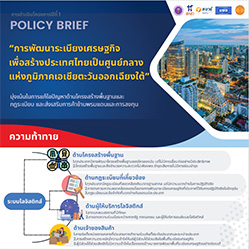
ข้อเสนอเชิงนโยบายเพื่อใช้ในการจัดทำแผนการพัฒนาระเบียงเศรษฐกิจ
สื่อสิ่งพิมพ์นำเสนอ “ข้อเสนอเชิงนโยบายเพื่อใช้ในการจัดทำแผนพัฒนาระเบียงเศรษฐกิจ” จากผลการศึกษาเร่ือง “การพัฒนาระเบียงเศรษฐกิจภูมิภาคเพื่อสร้างไทยเป็นศูนย์กลางแห่งเอเชียตะวันออกเฉียงใต้” ปีที่ 1 มุ่งเน้นการแก้ไขปัญหาด้านโครงสร้างพื้นฐานและกฎระเบียบ และส่งเสริมการค้าข้ามพรมแดนและการลงทุน
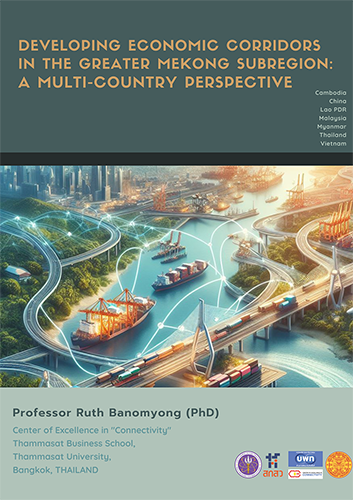
Developing Economic Corridors in the Greater Mekong Subregion: A Multi-Country Perspective
This book is the product of research undertaken as part of the “Developing Regional Economic Corridors to Enable Thai Centrality in Southeast Asia” project, financially supported by the Program Management Unit on Area-Based Development (PMU A) under the Thai Ministry of Higher Education.In adopting a cross-country comparative approach, this book seeks to deepen the understanding of essential elements required for effective economic corridor development. This, in turn, is intended to contribute to more informed decision-making and accelerate progress towards realizing the full growth and development potential of regional economic corridors. This book a comprehensive overview with specific national contexts provides information for leverage to expand development ideas, foster regional integration, and promote sustainable economic growth.

Thai Centality in a Changing Regional Order:
Economic Corridors and Connectivity Across Asia
Thailand stands at a pivotal crossroads in Asia’s evolving economic landscape. Moving beyond its traditional role as a mere transit nation, how can Thailand reposition itself as a high-value connective hub?
Developed by Thammasat University’s Center of Excellence in Connectivity and sponsored by PMU-A, this volume introduces the strategic framework of Thai centrality. Drawing on rigorous field studies across the Greater Mekong Subregion and key partners—including India, Japan, the Republic of Korea, and the Greater Bay Area—leading scholars, policymakers, and practitioners examine how infrastructure, institutions, and innovation drive inclusive regional growth.
More than a policy slogan, Thai centrality offers a concrete roadmap for operationalizing connectivity as an instrument of trade, diplomacy, and stability. Essential reading for decision-makers and researchers, this book charts a proactive path for Thailand to shape the future of regional architecture in Southeast Asia and beyond.